Why Standard Skin Assessments Miss Underlying Damage (And How We Evaluate Differently)

Your skin can look fine on the surface while real problems keep developing underneath. A short consultation focused on what is visible misses the factors that actually drive skin concerns and quite often leads to treatments that produce temporary results rather than lasting ones.
You might already be experiencing:
- Fine lines appearing earlier than expected.
- Uneven skin tone that persists despite a consistent skincare routine.
- Treatments that improve things briefly before the concern returns.
- Recurring skin issues that never fully resolve.
As a reputable beauty clinic in Melbourne, Advanced Beautytech believes every treatment should start with a proper understanding of your skin rather than assumptions based on how it looks on the day. This guide explains why standard assessments miss what matters, what a thorough evaluation actually covers, and how getting that foundation right changes the results you can expect from treatment.
Standard skin assessments quite often identify visible concerns without investigating what caused them. An experienced beauty clinic looks at skin health, lifestyle, treatment history, and long-term goals before recommending anything. Experts like Advanced Beautytech follow this approach because treating what is visible without understanding what is underneath produces results that do not last.
Why Can A Standard Skin Assessment Miss Hidden Skin Damage?
A standard consultation sees what is there. It quite often does not explain why it is there.
Fine lines, pigmentation, and redness all get noted during a brief appointment. What those observations do not reveal is what is happening beneath the surface. Reduced collagen support, impaired skin barrier function, and cumulative sun damage are not visible in a quick assessment, but they shape how skin responds to treatment and how long those results hold.
Two people sitting in the same chair with the same visible concern can have completely different underlying causes. Pigmentation alone can trace back to long-term UV exposure, inflammation, hormonal shifts, or previous cosmetic procedures. Treating the visible pigment without identifying which of those is driving it quite often produces short-term improvement and then the same concern returning.
What most consultations also miss is the broader picture. Previous treatments, skincare habits, occupational sun exposure, and how the skin recovers between procedures all influence what treatments are appropriate and in what order. None of that information surfaces in a ten-minute appointment focused on what can be seen.
Understand Your Skin Before Treatment
What Should A Comprehensive Skin Assessment Actually Evaluate?
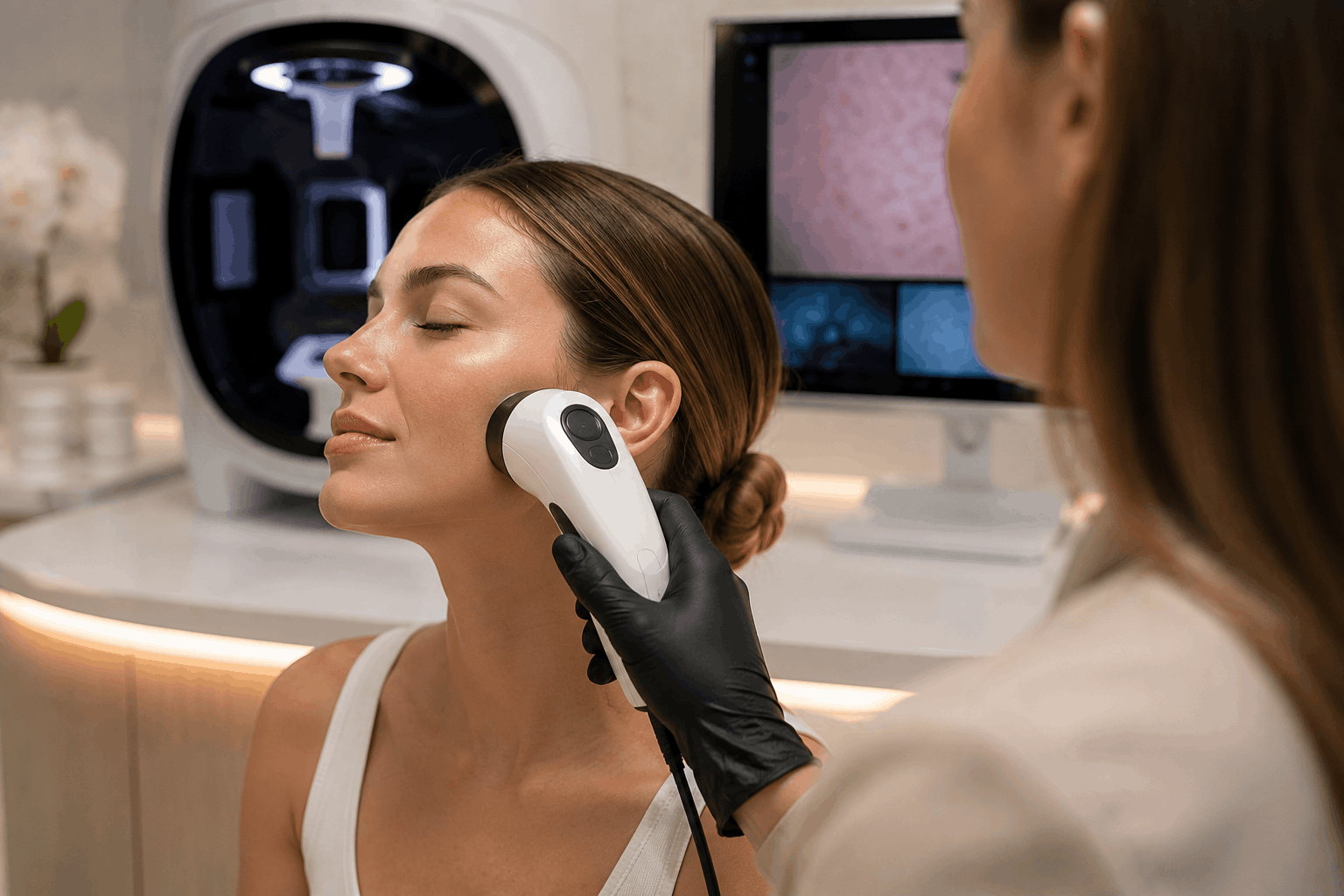
What can be seen with the naked eye is a starting point, not a complete picture.
At Advanced Beautytech, skin evaluations work through multiple factors before any treatment recommendation is made:
- Skin texture and current hydration levels.
- Pigmentation patterns and distribution.
- Elasticity and the condition of collagen support underneath.
- Sun damage history across the years, not just what is currently visible.
- Lifestyle factors that affect skin health day to day.
- The current skincare routine and how the skin is responding to it.
- Previous cosmetic treatments and how the skin recovered.
- What the patient actually wants to achieve and over what timeframe.
Looking at those elements together produces a different picture than any single visible concern does on its own.
People considering HIFU for skin laxity, for example, may benefit more from addressing hydration and barrier health first if those issues are limiting what the treatment can actually do. People interested in IPL treatment in Melbourne for pigmentation quite often achieve better long-term results when the trigger behind the pigmentation is identified before the first session rather than discovering it when the concern returns.
Why Doesn’t One Treatment Suit Every Patient?
Because skin does not age the same way in every person, and two patients with identical visible concerns can have completely different causes behind them.
Age, genetics, UV history, lifestyle, previous procedures, and skin sensitivity all shape how skin behaves and how it responds to treatment. A treatment plan built around what is visible rather than what is causing it is working with incomplete information.
|
Skin Concern |
Possible Underlying Cause |
Assessment Consideration |
|---|---|---|
|
Fine lines |
Collagen loss or dehydration |
Assess skin quality before selecting treatment |
|
Uneven pigmentation |
Sun exposure, inflammation, or hormones |
Identify the trigger rather than treating appearance alone |
|
Rough texture |
Reduced cell renewal or previous acne |
Evaluate overall condition before resurfacing |
|
Skin laxity |
Loss of collagen and elastin |
Determine whether tightening or collagen stimulation is the priority |
Sequencing matters just as much as treatment selection, and this is the detail most general skin advice skips. In some cases, improving the skin barrier or reducing inflammation before any procedure creates a stronger foundation for what follows. The treatment works better and the result holds longer because the conditions underneath were addressed first.
How Do We Pair Skin Concerns With The Right Treatment Plan?
Every treatment is recommended based on assessment and not based on what’s popular.
After the evaluation, all skin conditions, treatment goals, recovery preferences and cosmetic history are considered before anything is suggested.
In practice this means:
- HIFU may be better for reduced skin firmness If the main goal is to stimulate collagen and the skin is ready to respond well to it.
- Fractional RF may be more effective for acne scarring or texture irregularities depending on the skin type and how the skin heals between sessions.
- Laser skin resurfacing is effective for treating surface pigmentation and sun damage but improving overall texture is as important as treating the pigment itself.
- Skin needling may be more suitable for patients who are looking for gradual collagen support with little disruption, depending on the assessment.
The focus is on the right treatment at the right stage, not on recommending more treatments than the skin actually needs.
Why Long Term Skin Planning Is More Effective Than Treating Individual Concerns
Skin changes gradually. When one visible concern is addressed without consideration of the overall health of the skin it often results in immediate improvement while other underlying concerns continue to develop in the background.
A structured skin plan works on the basis of:
- Current skin condition and what it can support right now.
- Preventing future damage as well as treating existing conditions.
- Timing the seasons to work with skin rather than against it.
- Time to recover between procedures so that the skin is ready for what’s next.
- Treatment intervals according to the skin’s response are realistic.
- Long term maintenance once the primary concern is dealt with.
Timing influences results more than most quick consultations acknowledge. Scheduling procedures around sun exposure, recovery times, and routine occurrences influences comfort and results.
Comparison: Standard Assessment vs Comprehensive Skin Evaluation
|
Standard Assessment |
Comprehensive Skin Evaluation |
|
Focuses mainly on visible concerns |
Evaluates visible and underlying skin health |
|
Based on a single short consultation |
Considers skin history, lifestyle, and treatment goals |
|
May recommend treatment quickly |
Matches treatment to the cause of the concern |
|
Limited long-term planning |
Builds a staged treatment strategy where appropriate |
|
Reviews current concerns only |
Considers prevention, maintenance, and future skin health |
Build A Treatment Plan That Lasts
Conclusion
To make skin better permanently, you need to know why a problem exists. Choosing an experienced beauty clinic in Melbourne means you will receive an assessment that will consider your skin’s condition, history and goals before anything is recommended.
At Advanced Beautytech, every assessment is based on the individual skin conditions. Our team can offer you a full assessment of your skin to help you make informed decisions before you decide on a treatment.
FAQs
How long does a professional skin assessment usually take?
Longer than a standard consultation. A thorough evaluation works through skin concerns, medical and treatment history, lifestyle factors, current skincare routine, and treatment goals before discussing options. That process cannot be rushed without missing information that affects what gets recommended.
Should I stop using my skincare products before an assessment?
Usually not. Your normal routine gives the practitioner useful information about how your skin responds to active ingredients and where adjustments might help. Specific instructions will be provided if there is a reason to change anything beforehand.
Can a skin assessment change my original treatment choice?
Yes, and that is part of what makes it valuable. If the evaluation finds that a different treatment better suits your skin condition or long-term goals, that will be discussed openly before any decision is made. The assessment is there to inform the choice, not confirm a preference that was formed without full information.
How often should my skin be reassessed?
Skin changes over time with ageing, seasonal conditions, lifestyle shifts, and the effects of previous treatments. Periodic reassessment allows the treatment plan and skincare recommendations to adjust as your skin’s needs evolve rather than continuing with an approach that was right twelve months ago but may not be now.

Personalised treatments delivered by a Korean Registered Nurse. 20+ years of experience, 8+ years in aesthetic medicine. Korean-inspired aesthetic principles combined with Australian clinical standards.
Treatments
Opening Hours
Monday-Friday: 10am - 7pm
Saturday: 10am - 3pm
Sunday: Closed
Phone
03 9836 0505